

Christ the Redeemer – Brazil
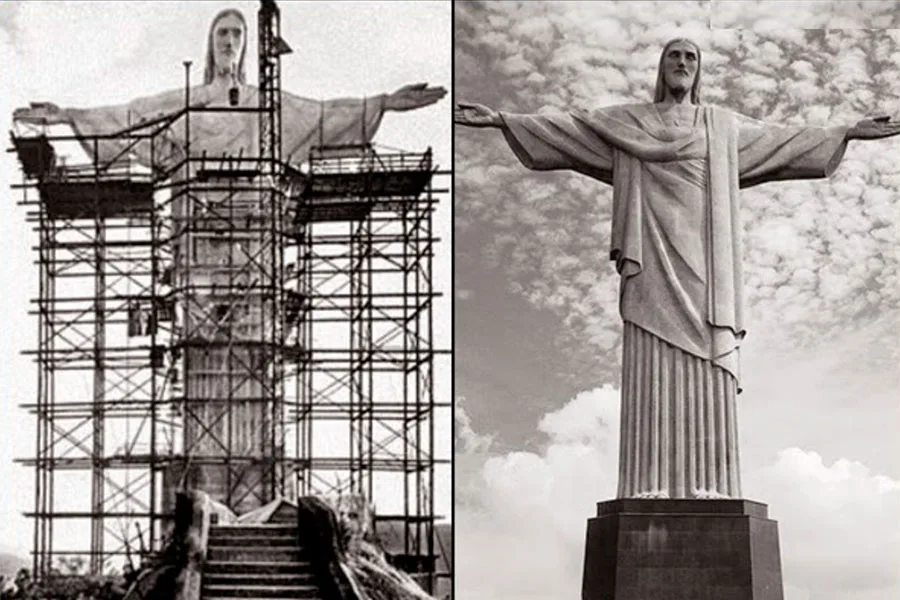
Inaugurated in 1931, it took 5 years to build and is today one of Brazil’s best-known postcards. Located 709 meters above sea level, the structure is 38 meters long, with 8 meters making up the pedestal alone. It is the youngest work among the other wonders of the modern world. The idea of building a large statue atop Corcovado was first suggested in the mid-1850s, when Father Pedro Maria Boss proposed placing a Christian monument on Corcovado Mountain to honor Princess Isabel, regent of Brazil and daughter of Emperor Dom Pedro II. The princess liked the idea and even lent her support to the construction. At the time of the signing of the Golden Law, faced with the possibility of being honored with a statue that would represent her as “The Redeemer,” Princess Isabel did not accept the request, as stated in the notice of August 2, 1888, emphasizing that the tribute should be paid to the true “Redeemer of mankind,” with an image of the Sacred Heart of Jesus. In 1889, the country became a republic and, with the official separation of Church and State, the proposal was discarded. The second proposal for a statue atop the mountain was made in 1920 by the Catholic Circle of Rio de Janeiro. The group organized an event called “Monument Week” to attract donations and collect signatures in support of building the statue. The donations came mainly from Brazilian Catholics. The designs considered for the “Statue of Christ” included a representation of the Christian cross, a statue of Jesus holding a globe, and a pedestal that would symbolize the world. The statue of Christ the Redeemer with open arms, a symbol of peace, was the one chosen. The local engineer Heitor da Silva Costa designed the statue, which was sculpted by Paul Landowski, a French-Polish sculptor.